


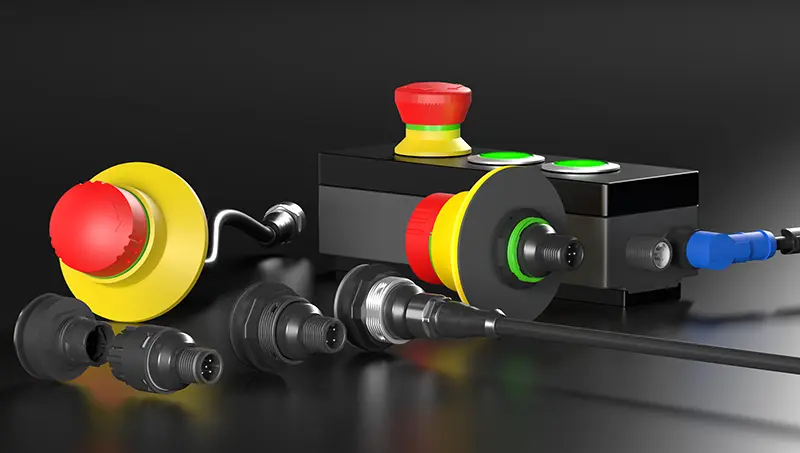











In Germany, around 1 million tons of plastics are processed annually in the electrical/electronics sector. The majority of these are fossil-based, with recyclates being used to a rather minor extent. A bio-based alternative that could be used in the electrical industry could make an enormous contribution to achieving CO2neutrality by 2050. The major challenge is to equip bio-based plastics with specific, mutually influencing functions, to further develop them for technical applications, and to make them economically compatible with conventional injection molding processes.
From structure-property model to market-ready products
In the joint research project "HighTechPLA," the project team is developing a high-performance material based on PLA for electronic components. The consortium combines expertise from research and industry in the fields of materials development, injection moulding, and production development. The initial goal is to gain a deep understanding of the structure-property relationships in PLA compounds in order to systematically resolve conflicts between crystallisation behaviour, impact strength, and flame retardancy, thereby meeting multiple functional requirements simultaneously.
A structure-property model will then enable formulations and processes to be simulated in a practical manner and validated in real production facilities. The close integration of material and process development is intended to keep cycle times comparable to conventional processes.
"Our goal is to ensure that project results can be quickly transferred into market-ready products. The results also have the potential to be extended to other industries," explains Christina Eloo, Circular and Bio-based Plastics Department at Fraunhofer UMSICHT.
The HighTechPLA project is funded by Germany's Federal Ministry of Research, Technology and Space.
Source: press release Fraunhofer UMSICHT / photo: Fraunhofer UMSICHT

